Robin MTA
SMTP reception, submission, routing, and relay queues.
 Robin Suite
Open Source Email Infrastructure
Host your own mail stack. Operate it from one administrative UI. Investigate mail flow and delivery issues.
Robin MTA handles transport. Robin Admin brings monitoring, telemetry, reporting, and service operations together. Robin Tools helps you find the answers. Coming soon: Robin Webmail, your everyday mailbox workspace.

SMTP transport, mailbox integration, durable queues, and a testing engine built to inspect the whole pipeline.
Meet the MTA 02 / Operations PlatformMonitoring, telemetry, email reporting intelligence, and fleet operations. Use it independently or as the suite's administrative workspace.
Explore Admin 03 / DiagnosticsCheck DNS, mail authentication, reputation, and server behavior. Use it inside Admin or run it independently.
Discover Tools 04 / Mailbox WorkspaceMail, contacts, calendar, and attachment views for documents and images, with application administration and retention settings.
Coming SoonThe Stack
Transport. Operations. Diagnostics. Your mailbox workspace. Independent services with clear responsibilities, with Robin Admin bringing visibility and operations across the managed stack.
SMTP reception, submission, routing, and relay queues.
Spam and phishing detection, DKIM signing, and virus scanning.
Mailbox access over IMAP / POP3 and delivery over LMTP.
Mail clients connect to the mail services; Admin operates the infrastructure. Robin Webmail, coming soon, brings a browser-based user workspace to the family, separate from fleet administration.
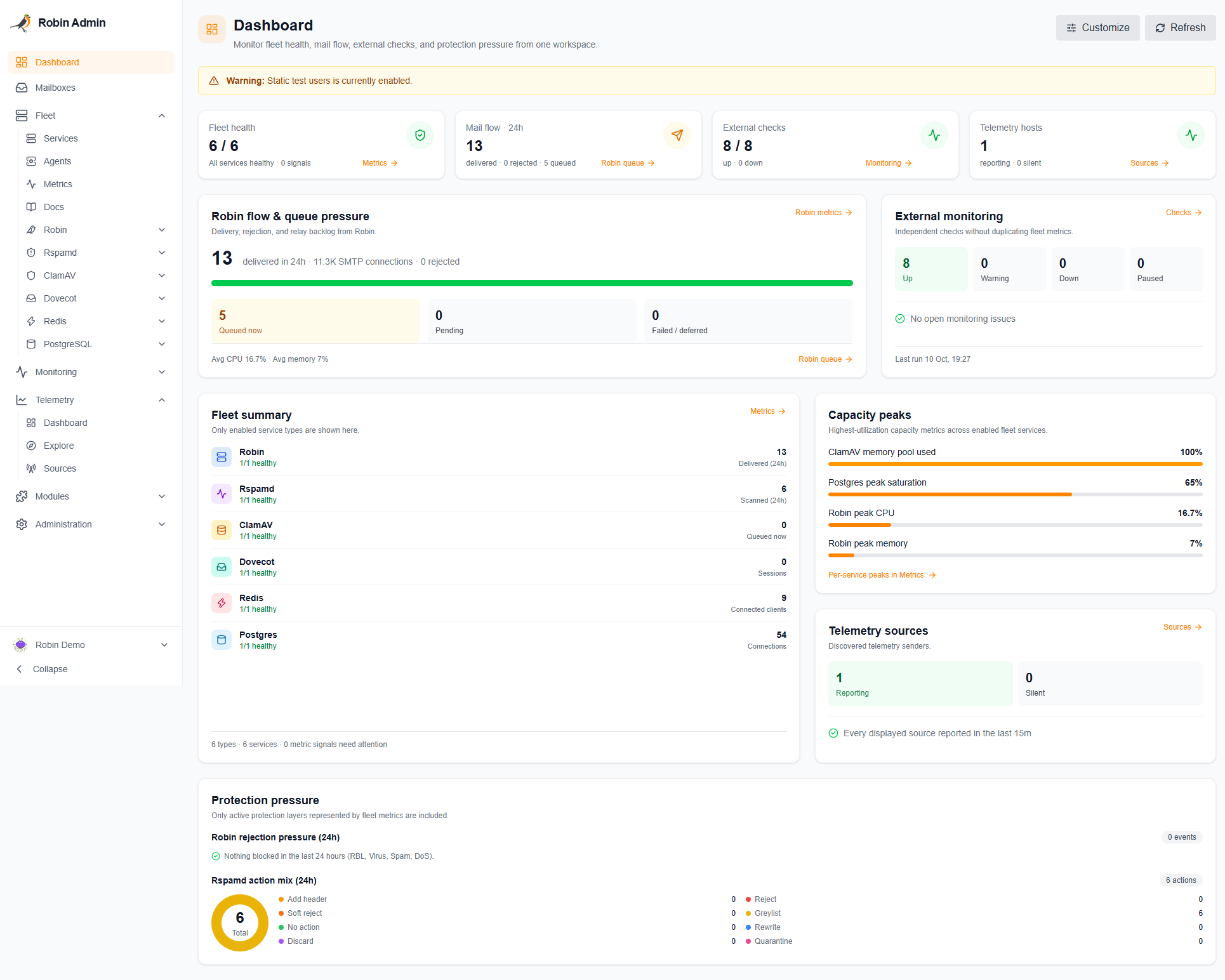
Beyond the Mail Stack
A self-hosted operations platform with deep email expertise. Use it for infrastructure monitoring, metrics, or report analysis even when Robin MTA isn't part of your setup.
Find the Answer
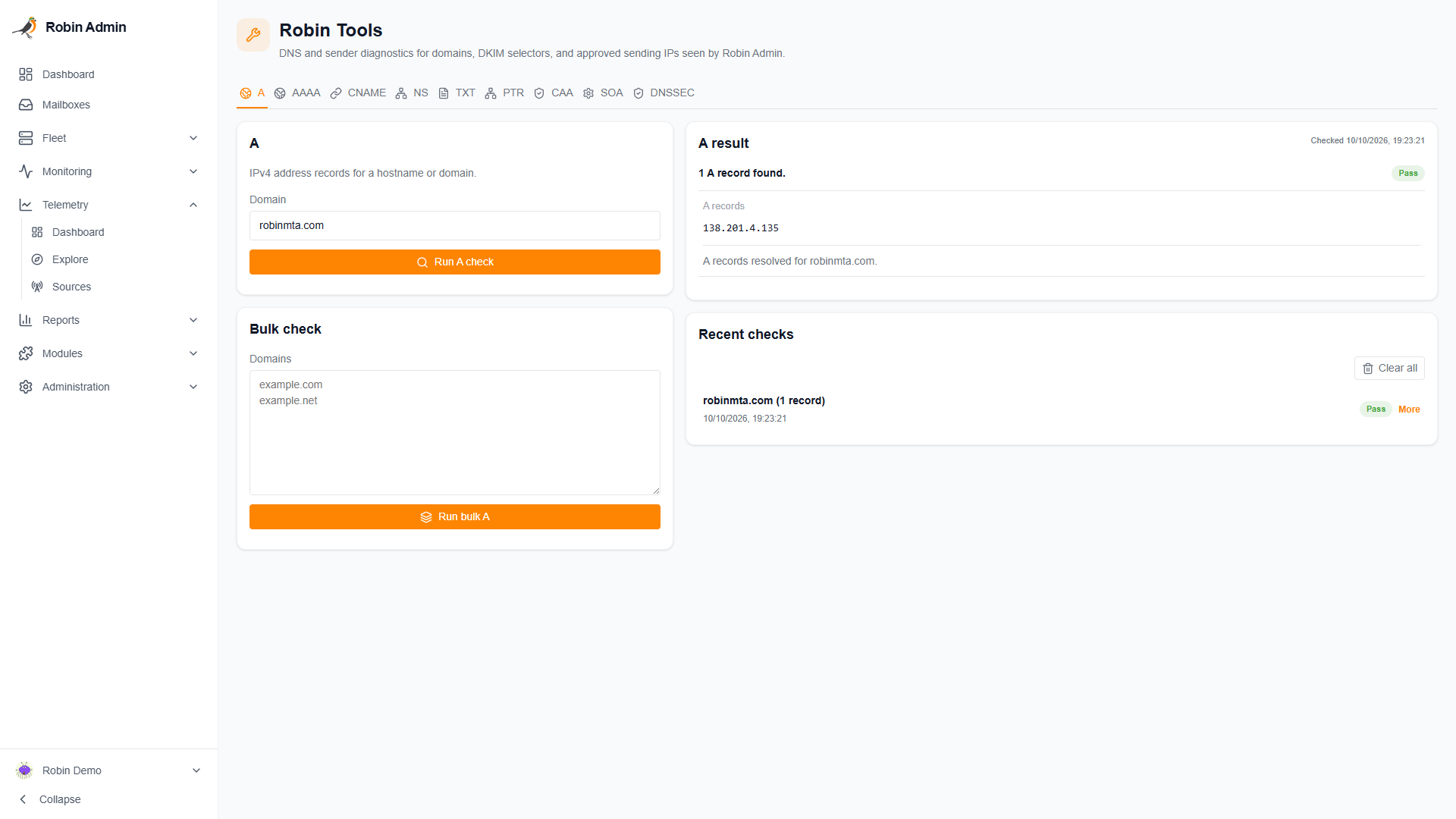
Robin Tools gives you focused workspaces for DNS, mail posture, reputation, and mail diagnostics—with readable results and check history.
Inside Robin Admin for an integrated workflow.
Standalone for an independent diagnostics box.
Built to Be Investigated
Service health, resource measurements, and actual mail delivery answer different questions. The suite gives you tools to investigate each layer.
Follow a JSON5 scenario from SMTP conversation through delivery logs to IMAP mailbox verification. Match decoded MIME content and attachment hashes, and carry captured identifiers into later checks.
Generate MIME and PDF fixtures, replay multi-envelope traffic, and reproduce controlled failure paths. Use Java/JUnit for CI or repeatable cases for synthetic monitoring.
Explore Delivery TestingUse Admin for monitoring, telemetry, and supported service operations. Open Tools for DNS, authentication, reputation, and mail-service diagnostics.
Bring availability, resource behavior, and delivery evidence into your investigation.
Explore the Operations Platform Explore the Diagnostic ToolkitStart Where You Are
Deploy the complete mail infrastructure, connect Admin to an existing estate, or use Tools on its own.
Start with monitoring, telemetry, or report ingestion. Those capabilities don't require Robin MTA or a mail-service fleet.
Connect supported services—including Postfix estates—when you need operational controls. Available actions reflect your service access and topology.
Admin Getting StartedRun a self-hosted diagnostics workspace with its own authentication and PostgreSQL database. No Admin deployment required.
Standalone Tools GuideRun these from the respective cloned repositories, after following each guide's configuration steps. The mail stack, Admin, and Tools are separate Compose deployments on the shared suite network.
docker compose -f .suite/docker-compose.yaml up -ddocker compose -f docker-compose.yaml -f docker-compose.suite.yaml up -ddocker compose up -d --buildFor Admin integration, configure module trust and proxy settings as described in the Tools integration guide.
The deployment guides cover domain configuration, DNS, TLS, service access, and operating the stack.
Open Source, All the Way Down
Robin MTA, Robin Admin, and Robin Tools are Apache-2.0 projects. Read the code, run the services, file an issue, or send a pull request. Contributions to any part of the suite are welcome.
Building your own email tooling? Explore Robin's reusable Java libraries.